Home / Patient Guides

Home / Patient guides

Patient guides · 30 guides

Patient guides.

Complete guides to common concerns, each with shorter articles that answer one question at a time. Written and clinically reviewed by clinical psychologist Dr. Mithila Desai. For advice about your own situation, book a session.

01 · Anxiety and mood

Anxiety & Panic Attacks: Symptoms, Causes and Treatment

Anxiety and panic attacks are common, frightening and very treatable. Learn the signs, the causes, what an assessment involves and which therapies help. Read the full guide

clinical psychologist listening to a young woman talk about anxiety during a counselling sessionAnxiety and mood19 minAnxiety & Panic Attacks: Symptoms, Causes and TreatmentAnxiety is a normal reaction to threat or uncertainty. It becomes a clinical problem when it is intense, lasts for weeks or months, and starts to interfere with daily life. A panic attack is a sudden surge of fear with strong physical symptoms, such as a racing heart and breathlessness, that usually peaks within a few minutes. Therapies such as cognitive behavioural therapy (CBT) are among the most widely studied and recommended treatments for both.Dr. Mithila Desai
23 Nov 2026
Reviewed
Anxiety vs Stress: How to Tell the Difference, a patient guide by Dr. Mithila DesaiAnxiety and mood3 minAnxiety vs Stress: How to Tell the DifferenceStress is a reaction to an identifiable demand and usually eases once the situation resolves. Anxiety involves excessive, persistent worry that may not match the situation and can continue after the stressor is gone. Both can cause tension, irritability and sleep problems. Seek help if worry lasts for weeks, feels hard to control or affects work, relationships or daily life.Dr. Mithila Desai
23 Nov 2026
Reviewed
What Does an Anxiety Attack Feel Like?, a patient guide by Dr. Mithila DesaiAnxiety and mood3 minWhat Does an Anxiety Attack Feel Like?An anxiety attack often feels like a wave of intense worry with physical symptoms such as a racing heart, tight chest, shortness of breath, sweating, trembling, nausea, dizziness and muscle tension, along with racing thoughts, fear of losing control and difficulty concentrating. It usually builds gradually in response to stress or worry and eases over time. Chest pain or breathing difficulty should be checked medically to rule out other causes.Dr. Mithila Desai
23 Nov 2026
Reviewed
Panic Attack vs Anxiety Attack: What Is the Difference?, a patient guide by Dr. Mithila DesaiAnxiety and mood3 minPanic Attack vs Anxiety Attack: What Is the Difference?A panic attack is a sudden surge of intense fear that peaks within minutes, often with a pounding heart, chest pain, shortness of breath, dizziness and a sense of doom, sometimes without any clear trigger. An anxiety attack is not a formal diagnosis and usually describes worry that builds gradually in response to stress, with milder but longer-lasting symptoms. Both are treatable.Dr. Mithila Desai
23 Nov 2026
Reviewed
Social Anxiety: Signs, Causes and How Therapy Helps, a patient guide by Dr. Mithila DesaiAnxiety and mood3 minSocial Anxiety: Signs, Causes and How Therapy HelpsSocial anxiety involves strong fear of being negatively judged in social or performance situations, leading to avoidance, physical symptoms such as blushing, sweating and trembling, and worrying for days before and after events. It often starts in adolescence. Cognitive behavioural therapy, including gradual exposure and changing unhelpful thoughts, is an effective treatment.Dr. Mithila Desai
23 Nov 2026
Reviewed
Health Anxiety: Why You Keep Googling Symptoms, a patient guide by Dr. Mithila DesaiAnxiety and mood3 minHealth Anxiety: Why You Keep Googling SymptomsHealth anxiety involves frequent worry about serious illness, misinterpreting normal sensations as danger, repeated checking of the body, searching symptoms online and seeking reassurance from doctors or family. Reassurance brings short-term relief but keeps the anxiety going. Cognitive behavioural therapy helps break this cycle by changing how sensations are interpreted and reducing checking and reassurance-seeking.Dr. Mithila Desai
23 Nov 2026
Reviewed
02 · Anxiety and mood

Depression and Low Mood: A Guide for Patients and Families

A plain-language guide to depression and low mood covering signs, causes, assessment, treatment options and practical ways families can support someone who is struggling. Read the full guide

father listening to his daughter talk about her low mood at homeAnxiety and mood17 minDepression and Low Mood: A Guide for Patients and FamiliesDepression is diagnosed when low mood or loss of interest lasts at least two weeks, is present most of the day, and comes with other symptoms such as disturbed sleep, low energy, poor concentration or feelings of worthlessness that affect daily functioning. Ordinary low mood is shorter and milder. Depression responds to psychotherapy, medication or a combination, and most people improve with the right treatment.Dr. Mithila Desai
23 Nov 2026
Reviewed
Depression vs Sadness: When Low Mood Needs Help, a patient guide by Dr. Mithila DesaiAnxiety and mood3 minDepression vs Sadness: When Low Mood Needs HelpSadness is usually linked to a specific event, comes and goes, and still allows you to enjoy some things and function. Depression involves persistent low mood or loss of interest for at least two weeks, along with symptoms such as sleep and appetite changes, tiredness, guilt, poor concentration and hopelessness, affecting daily life. If low mood persists or you have thoughts of self-harm, seek help.Dr. Mithila Desai
23 Nov 2026
Reviewed
High-Functioning Depression: Can You Look Fine?, a patient guide by Dr. Mithila DesaiAnxiety and mood3 minHigh-Functioning Depression: Can You Look Fine?Yes, you can look fine and still be depressed. People with high-functioning depression may keep up with work and social life while privately struggling with persistent low mood, exhaustion, self-criticism, loss of enjoyment and sleep problems. Some may have persistent depressive disorder, a long-lasting form of depression. It is treatable, and functioning well does not mean you do not deserve help.Dr. Mithila Desai
23 Nov 2026
Reviewed
How Depression Affects Sleep, Energy and Concentration, a patient guide by Dr. Mithila DesaiAnxiety and mood2 minHow Depression Affects Sleep, Energy and ConcentrationDepression can cause too little or too much sleep, constant tiredness even after rest, and trouble concentrating, remembering or making decisions. These are symptoms of the condition, not laziness or weak willpower. Therapy, healthy routines and, when needed, medical care can help.Dr. Mithila Desai
23 Nov 2026
Reviewed
When Should You See a Psychologist for Depression?, a patient guide by Dr. Mithila DesaiAnxiety and mood2 minWhen Should You See a Psychologist for Depression?Consider seeing a psychologist if low mood, loss of interest, hopelessness or tiredness lasts two weeks or more, affects work, studies or relationships, or keeps coming back. Seek urgent help straight away if you have thoughts of harming yourself.Dr. Mithila Desai
23 Nov 2026
Reviewed
Suicidal Thoughts During Depression: Getting Help Now, a patient guide by Dr. Mithila DesaiAnxiety and mood3 minSuicidal Thoughts During Depression: Getting Help NowSeek immediate help if you have thoughts of ending your life, especially if you have a plan, access to means or feel you cannot keep yourself safe. Contact Tele-MANAS at 14416, emergency services at 112, go to the nearest hospital emergency department, or reach out to someone you trust and ask them to stay with you. Suicidal thoughts are treatable, and many people who once felt this way go on to feel better.Dr. Mithila Desai
23 Nov 2026
Reviewed
03 · OCD

OCD and Intrusive Thoughts: Symptoms, Compulsions and Treatment

Intrusive thoughts don't mean you want to act on them. A clinical psychologist explains OCD symptoms, compulsions, mental rituals and how treatment works. Read the full guide

Clinical psychologist talking with a young woman about intrusive thoughts during a therapy sessionOCD18 minOCD and Intrusive Thoughts: Symptoms, Compulsions and TreatmentOCD is a condition made up of obsessions (unwanted, intrusive thoughts, images or urges that cause anxiety) and compulsions (actions or mental rituals done to reduce that anxiety). Intrusive thoughts on their own are common and do not reveal a person's wishes or character. OCD is usually treated with cognitive behavioural therapy that includes exposure and response prevention (ERP), sometimes alongside medication prescribed by a psychiatrist.Dr. Mithila Desai
23 Nov 2026
Reviewed
Intrusive Thoughts vs OCD: When Thoughts Become a Cycle, a patient guide by Dr. Mithila DesaiOCD3 minIntrusive Thoughts vs OCD: When Thoughts Become a CycleIntrusive thoughts are common and usually pass without much distress. OCD develops when intrusive thoughts become obsessions that cause intense anxiety and lead to compulsions, such as checking, washing, counting, seeking reassurance or mental rituals, that take up significant time or affect daily life. Having an intrusive thought does not mean you want to act on it. Exposure and response prevention therapy is an effective treatment.Dr. Mithila Desai
23 Nov 2026
Reviewed
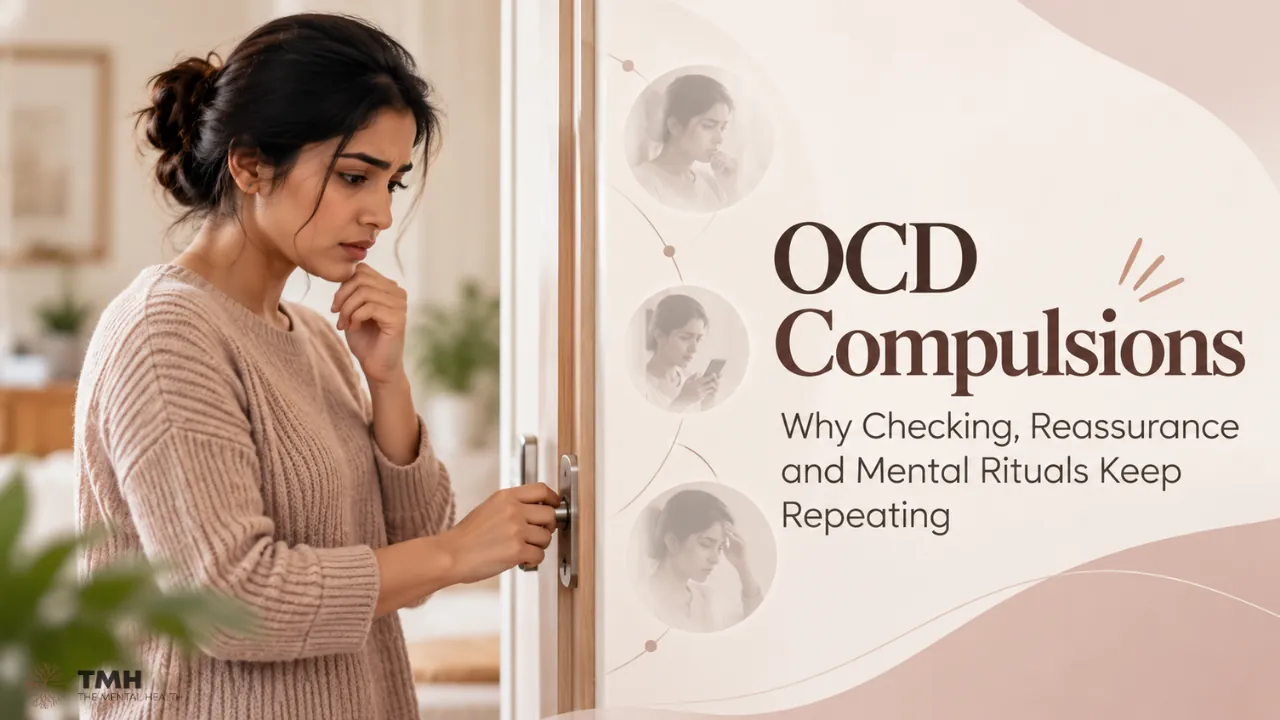
OCD Compulsions: Why Checking and Rituals Keep Repeating, a patient guide by Dr. Mithila DesaiOCD3 minOCD Compulsions: Why Checking and Rituals Keep RepeatingCompulsions repeat because they work for a few minutes. The relief rewards the behaviour, and the brain learns to rely on it. Over time, more checking or reassurance is needed for the same relief. Therapy such as exposure and response prevention (ERP) helps people face the fear without doing the compulsion, so the brain learns that the anxiety can pass on its own.Dr. Mithila Desai
23 Nov 2026
Reviewed
OCD vs Overthinking: How to Tell the Difference, a patient guide by Dr. Mithila DesaiOCD2 minOCD vs Overthinking: How to Tell the DifferenceOverthinking is repeated worry or analysis about real-life concerns, usually linked to a topic you can name. OCD involves unwanted, intrusive thoughts that cause intense distress, along with compulsions or mental rituals done to reduce that distress. OCD takes up a lot of time and interferes with daily life. A professional assessment can tell them apart.Dr. Mithila Desai
23 Nov 2026
Reviewed
Can OCD Be Treated Without Medication?, a patient guide by Dr. Mithila DesaiOCD3 minCan OCD Be Treated Without Medication?Therapy, especially ERP, can significantly reduce OCD symptoms for many people without medication, particularly in mild to moderate OCD. Medication may be recommended when symptoms are severe, when depression is also present, when therapy alone has not helped enough, or when OCD makes it hard to engage in therapy. The decision is made with a psychologist and psychiatrist together.Dr. Mithila Desai
23 Nov 2026
Reviewed
OCD in Children and Teens: Signs Parents Should Notice, a patient guide by Dr. Mithila DesaiOCD3 minOCD in Children and Teens: Signs Parents Should NoticeSigns of OCD in children include excessive handwashing, repeated checking, needing things done in a strict order, asking for reassurance again and again, long bedtime or bathroom rituals, and intense distress when routines are interrupted. If these behaviours take a lot of time, cause distress or affect school, friendships or family life, an assessment by a child psychologist is a good next step.Dr. Mithila Desai
23 Nov 2026
Reviewed
04 · Anxiety and mood

Overthinking and Rumination: Why Your Mind Won't Switch Off

Stuck replaying the same thoughts? Learn what overthinking and rumination really are, why fighting them makes them louder, and when to talk to a psychologist. Read the full guide

woman holding a cup of chai by a window, thinking quietly in a sunlit apartmentAnxiety and mood17 minOverthinking and Rumination: Why Your Mind Won't Switch OffOverthinking is repetitive negative thinking, usually either rumination about the past or worry about the future. It keeps going because part of the mind believes the thinking is protecting you or getting you closer to an answer. Trying to push thoughts away tends to bring them back harder. Therapies such as CBT and metacognitive therapy teach people to recognise the loop and step out of it instead of fighting it.Dr. Mithila Desai
23 Nov 2026
Reviewed
Why Do I Overthink Everything? Common Patterns Behind It, a patient guide by Dr. Mithila DesaiAnxiety and mood3 minWhy Do I Overthink Everything? Common Patterns Behind ItPeople overthink because the mind is trying to protect them from danger, mistakes or rejection. Thinking feels like problem-solving, but repeated loops rarely lead to answers. Common patterns include rumination about the past, worry about the future, analysis paralysis and seeking certainty. Mindful awareness, scheduled worry time and therapy can help break the cycle.Dr. Mithila Desai
23 Nov 2026
Reviewed
How to Stop Replaying Conversations in Your Head, a patient guide by Dr. Mithila DesaiAnxiety and mood3 minHow to Stop Replaying Conversations in Your HeadTo stop replaying conversations, first name the pattern, then ask whether there is anything useful to do, such as clarifying or apologising. If there is, take that step. If not, use grounding, a short distraction or a set worry time. Over time, therapy can help with the anxiety, perfectionism or self-criticism that fuels the replay.Dr. Mithila Desai
23 Nov 2026
Reviewed
Overthinking at Night: Why Your Mind Gets Louder, a patient guide by Dr. Mithila DesaiAnxiety and mood3 minOverthinking at Night: Why Your Mind Gets LouderNight-time overthinking happens when quiet surroundings and tiredness let unprocessed thoughts surface. To reduce it, create a calm wind-down routine, write worries down earlier in the evening, limit screens and caffeine, and get out of bed if you cannot sleep after a while. Therapy, including CBT for insomnia, can help when it becomes a regular problem.Dr. Mithila Desai
23 Nov 2026
Reviewed
Overthinking and Anxiety: Are They the Same Thing?, a patient guide by Dr. Mithila DesaiAnxiety and mood3 minOverthinking and Anxiety: Are They the Same Thing?Overthinking describes how you think: repeatedly and without resolution. Anxiety describes how you feel: tense, fearful or on edge, often with physical symptoms like a racing heart. When overthinking is mostly about future threats and comes with constant worry, restlessness and physical tension for weeks, it may be part of an anxiety disorder that therapy can help.Dr. Mithila Desai
23 Nov 2026
Reviewed
Decision Paralysis and Overthinking: Why You Cannot Decide, a patient guide by Dr. Mithila DesaiAnxiety and mood2 minDecision Paralysis and Overthinking: Why You Cannot DecideDecision paralysis happens when fear of making the wrong choice, perfectionism or too many options keep you stuck. Overthinking feeds it by replaying every possible outcome. Setting limits, simplifying choices, accepting "good enough" and tolerating some uncertainty can help.Dr. Mithila Desai
23 Nov 2026
Reviewed
05 · Relationships

Relationship & Marriage Counselling: Conflict, Trust & Boundaries

Relationship and marriage counselling can help couples who feel stuck in the same arguments, struggle with trust or clash over boundaries. Here is what it involves. Read the full guide

couple talking with a psychologist during a marriage counselling sessionRelationships18 minRelationship & Marriage Counselling: Conflict, Trust & BoundariesRelationship and marriage counselling, also known as couples therapy, is a structured form of psychotherapy that helps partners communicate more clearly, handle conflict with less damage, rebuild trust and agree on boundaries. Dating, engaged, married and long-term couples can all attend, and one partner can start alone. Results differ from couple to couple. Where there is ongoing abuse, individual support and safety usually come before joint sessions.Dr. Mithila Desai
23 Nov 2026
Reviewed
When Should Couples Go to Marriage Counselling?, a patient guide by Dr. Mithila DesaiRelationships2 minWhen Should Couples Go to Marriage Counselling?Couples may consider counselling when arguments repeat without resolution, communication has broken down, trust has been damaged, intimacy has faded, major life changes cause strain, or one or both partners feel unhappy or distant. You do not need to be on the brink of separation to seek help.Dr. Mithila Desai
23 Nov 2026
Reviewed
Why the Same Arguments Keep Repeating in Relationships, a patient guide by Dr. Mithila DesaiRelationships3 minWhy the Same Arguments Keep Repeating in RelationshipsRepeating arguments happen when couples argue about the surface issue instead of the deeper feeling or need beneath it. Patterns like blaming, defending, stonewalling and bringing up the past keep the cycle going. Learning to speak about feelings and needs, listening to understand and taking breaks when emotions run high can help. Couples counselling offers structured support.Dr. Mithila Desai
23 Nov 2026
Reviewed
Healthy Boundaries in Relationships: Signs and Examples, a patient guide by Dr. Mithila DesaiRelationships3 minHealthy Boundaries in Relationships: Signs and ExamplesHealthy boundaries mean you can say no without fear, express your needs clearly, respect your partner's limits and keep some personal space and identity. Signs you may need stronger boundaries include constant guilt, people-pleasing, resentment, feeling drained or losing touch with your own interests. Boundaries are set calmly, specifically and with follow-through.Dr. Mithila Desai
23 Nov 2026
Reviewed
How to Rebuild Trust After Conflict or Betrayal, a patient guide by Dr. Mithila DesaiRelationships3 minHow to Rebuild Trust After Conflict or BetrayalTrust is rebuilt through full accountability, honest communication, consistent behaviour over time and patience with the healing process. It cannot be rushed or demanded. Both partners must be willing to work on the relationship. If the betrayal involves abuse or safety concerns, safety and individual support come first.Dr. Mithila Desai
23 Nov 2026
Reviewed
Couples Therapy vs Individual Therapy: Which Do You Need?, a patient guide by Dr. Mithila DesaiRelationships2 minCouples Therapy vs Individual Therapy: Which Do You Need?Couples therapy focuses on the relationship, with both partners working on communication, trust and shared problems. Individual therapy focuses on one person's thoughts, emotions and patterns, including how they affect relationships. Many people benefit from one, the other or both, and a psychologist can help you decide.Dr. Mithila Desai
23 Nov 2026
Reviewed
Talk to Dr. Desai

Some questions need a conversation.

In person on Gulmohar Road, Borivali West, or online. A short message is enough to begin.

Need urgent help? Call 112 or Tele-MANAS 14416 (free, 24 hours).

A calm corner of the therapy room
Book Chat