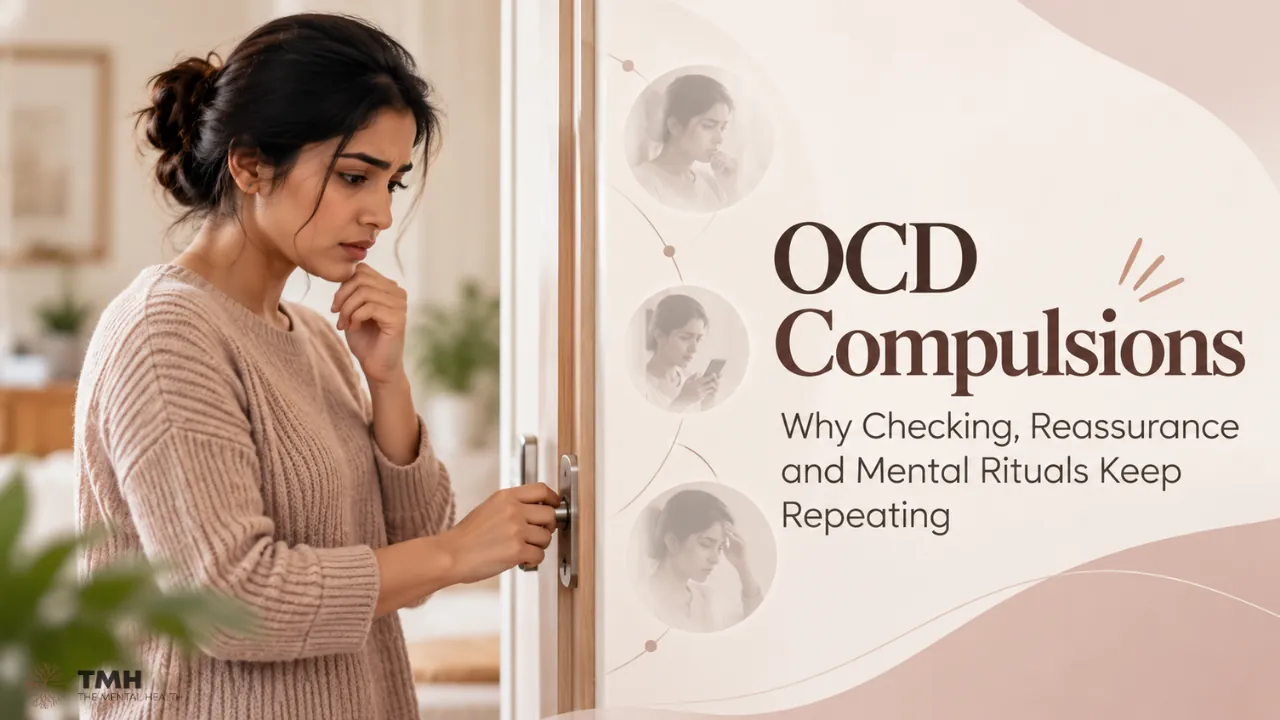
OCD can begin in childhood or the teenage years. Children may have repeated, upsetting thoughts and feel they must do certain actions, such as washing, checking, asking the same question or arranging things, to feel safe. Because children may hide symptoms or not have words for them, parents often notice changes in routines, time spent on tasks or distress when things are "not right".
How Is OCD Different From Normal Childhood Habits?
Many young children enjoy routines, like the same bedtime story. This is normal. OCD is different because:
The behaviour is driven by fear or discomfort, not enjoyment
The child feels they must do it, even if they wish they did not
It takes up significant time
Interrupting it causes strong distress or anger
It interferes with daily life
Common Signs Parents May Notice
Washing and cleaning
Washing hands until the skin is dry or cracked, avoiding "dirty" things or refusing to touch others.
Checking
Checking doors, school bags or homework many times.
Reassurance-seeking
Asking "Are you sure?" or "Will something bad happen?" repeatedly.
Ordering and symmetry
Needing things arranged perfectly or repeating actions until they feel "just right".
Counting and repeating
Counting steps, rereading or rewriting work again and again.
Slow routines
Very long time to get dressed, finish homework or get ready for bed.
Avoidance
Avoiding places, objects or people linked to fears.
Emotional signs
Irritability, tearfulness, frustration or tantrums when rituals are blocked.
How Can Parents Respond?
Stay calm and avoid shaming or punishing
Listen without judging the thoughts
Avoid joining in rituals or providing endless reassurance, with guidance from a professional
Praise effort when your child resists a compulsion
Talk to the school if symptoms affect learning
How Is OCD Treated in Children?
A child psychologist assesses symptoms through conversations with the child and parents. Treatment often involves cognitive behavioural therapy with exposure and response prevention, adapted for the child's age. Parents play an active role. For some children, a psychiatrist may also be involved.
When to Seek Urgent Help
If your child talks about self-harm, stops eating, or becomes extremely distressed or withdrawn, seek professional help promptly. In an emergency, contact local emergency services.
Key Takeaways
OCD can begin in childhood.
Rituals are driven by fear, not enjoyment.
Distress when routines are interrupted is a key sign.
Parents should avoid feeding reassurance cycles.
Child-focused CBT with ERP can help.
Final Thoughts
Noticing OCD early can spare a child years of hidden distress. With understanding at home and the right therapy, children can learn to manage OCD and enjoy daily life again. For a child and family assessment, you can consult Dr. Mithila Desai, a clinical psychologist at thementalhealth.in in Mumbai.
Read the full guide
This article is part of our complete guide, OCD and Intrusive Thoughts: Symptoms, Compulsions and Treatment, which covers symptoms, causes, assessment and treatment in one place.
If you are in danger right now
If you have hurt yourself, are thinking of ending your life, or feel you may act on thoughts of harming yourself or someone else, please do not wait for an appointment. Call 112, go to the nearest hospital emergency department, or call Tele-MANAS on 14416 or 1-800-891-4416. Tele-MANAS is the Government of India's free mental health helpline, open 24 hours, in many Indian languages. Messages to The Mental Health are answered during clinic hours.
Common questions
At what age can OCD start?
OCD can start as early as preschool, though it often appears between late childhood and the teenage years. Early symptoms may be mistaken for habits or fussiness. An assessment can clarify what is happening.
Is my child just being stubborn or is it OCD?
Stubborn behaviour is usually about wanting something. OCD behaviour is driven by fear or discomfort, and the child may feel unable to stop. If routines cause distress and take a lot of time, consider an assessment.
Should I give my child reassurance when they ask repeatedly?
Some reassurance is natural, but in OCD, repeated reassurance can keep the cycle going. A therapist can guide you on how to respond with warmth while gradually reducing reassurance.
Can children grow out of OCD?
Some children's symptoms ease over time, but many need support to manage them. Early therapy gives children skills to cope and reduces the chance of OCD affecting school, friendships and family life.
Will my child need medication for OCD?
Many children improve with therapy alone. A psychiatrist may suggest medication if symptoms are severe or do not improve with therapy. Decisions are made together with parents and the care team.
How can schools help a child with OCD?
Teachers can allow extra time when needed, avoid drawing attention to rituals and coordinate with parents and therapists. Clear, supportive communication helps the child feel safe at school.

Registered with the Rehabilitation Council of India · Last reviewed 23 Nov 2026
This guide gives general information about psychological care at The Mental Health. It is not a diagnosis and does not replace a session. Read our editorial policy.