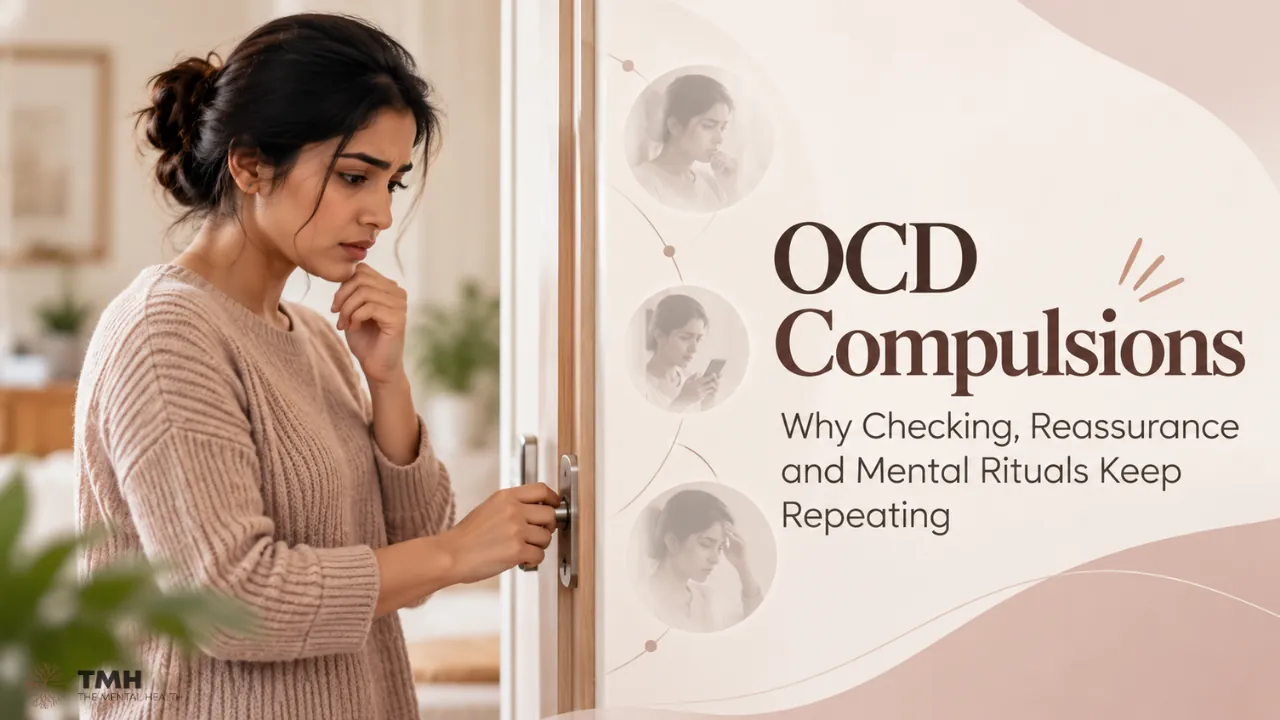
OCD compulsions are repeated actions or mental acts a person feels driven to do to reduce the anxiety caused by an obsession. Common examples include checking locks, washing, seeking reassurance, counting or mentally reviewing events. Compulsions give short-term relief, but they teach the brain that the fear was real and needed action, so the urge returns stronger.
What Is the OCD Cycle?
The cycle usually follows four steps:
Obsession: an unwanted thought, image or urge appears
Anxiety: strong discomfort, fear or a sense that something is "not right"
Compulsion: an action or mental act to reduce the distress
Relief: temporary calm, which strengthens the cycle
Then the obsession returns, often more intensely.
Common Types of Compulsions
Checking
Repeatedly checking doors, gas, switches, messages or one's own body for signs of illness.
Washing and cleaning
Washing hands or cleaning beyond what is needed, often linked to contamination fears.
Reassurance-seeking
Asking family, friends or the internet the same questions to feel certain.
Mental rituals
Silent actions such as counting, praying in a fixed way, repeating phrases or mentally reviewing past events.
Ordering and arranging
Arranging items until they feel "just right".
Avoidance
Staying away from people, places or objects that trigger obsessions.
Why Is Reassurance a Trap?
Reassurance feels kind and helpful, but in OCD it works like any other compulsion. Each answer brings brief relief, and soon another doubt appears. Family members often get pulled into giving reassurance, which unintentionally keeps OCD going. Therapy helps families respond with support but without feeding the cycle.
How Is OCD Different From Habits?
Habits are usually automatic and not distressing. OCD compulsions are driven by fear or discomfort, take up significant time and interfere with work, study or relationships.
How Does Therapy Help?
Exposure and response prevention (ERP)
A form of cognitive behavioural therapy where a person gradually faces feared situations while resisting compulsions. Anxiety rises, then falls on its own. The brain learns new, safer predictions.
Cognitive work
Helps people notice and question beliefs such as "If I think it, it will happen" or "I must be 100 percent certain".
Family involvement
Guidance for loved ones on reducing reassurance and accommodation.
Psychiatric support
For some people, medicine prescribed by a psychiatrist is used alongside therapy.
Key Takeaways
Compulsions reduce anxiety for a short time only.
Relief strengthens the OCD cycle.
Reassurance-seeking is a common compulsion.
Mental rituals count as compulsions too.
ERP therapy helps break the loop.
Final Thoughts
Compulsions can feel impossible to stop, but they are a learned pattern, and patterns can change with the right support. You do not have to fight the cycle alone. For a structured OCD assessment and therapy, you can consult Dr. Mithila Desai, a clinical psychologist at thementalhealth.in in Mumbai.
Read the full guide
This article is part of our complete guide, OCD and Intrusive Thoughts: Symptoms, Compulsions and Treatment, which covers symptoms, causes, assessment and treatment in one place.
If you are in danger right now
If you have hurt yourself, are thinking of ending your life, or feel you may act on thoughts of harming yourself or someone else, please do not wait for an appointment. Call 112, go to the nearest hospital emergency department, or call Tele-MANAS on 14416 or 1-800-891-4416. Tele-MANAS is the Government of India's free mental health helpline, open 24 hours, in many Indian languages. Messages to The Mental Health are answered during clinic hours.
Common questions
Why do I feel the need to check things again and again?
In OCD, checking reduces doubt and anxiety for a short time. That relief teaches the brain to check again whenever doubt returns. Over time, the urge grows stronger. Therapy helps you tolerate doubt without checking.
Is asking for reassurance a compulsion?
In OCD, repeated reassurance-seeking often works as a compulsion. It brings brief relief but keeps the worry alive. A therapist can help you and your family find supportive ways to respond without feeding the cycle.
What are mental compulsions?
Mental compulsions are rituals done in the mind, such as counting, repeating words, praying in a fixed way or reviewing memories. They are less visible than checking or washing but work the same way.
Can OCD compulsions stop on their own?
They rarely stop without help, because the relief keeps reinforcing them. With therapy such as ERP, many people learn to reduce compulsions significantly and regain control over daily life.
Is ERP therapy scary?
ERP is done gradually and collaboratively. You and your therapist start with small, manageable steps. Anxiety may rise briefly, but it is guided and planned. Most people find it becomes easier with practice.
How can family members help someone with OCD?
Learn about OCD, avoid joining in rituals and gently reduce reassurance with the therapist's guidance. Offer emotional support and patience. Family sessions can make home support more effective.

Registered with the Rehabilitation Council of India · Last reviewed 23 Nov 2026
This guide gives general information about psychological care at The Mental Health. It is not a diagnosis and does not replace a session. Read our editorial policy.