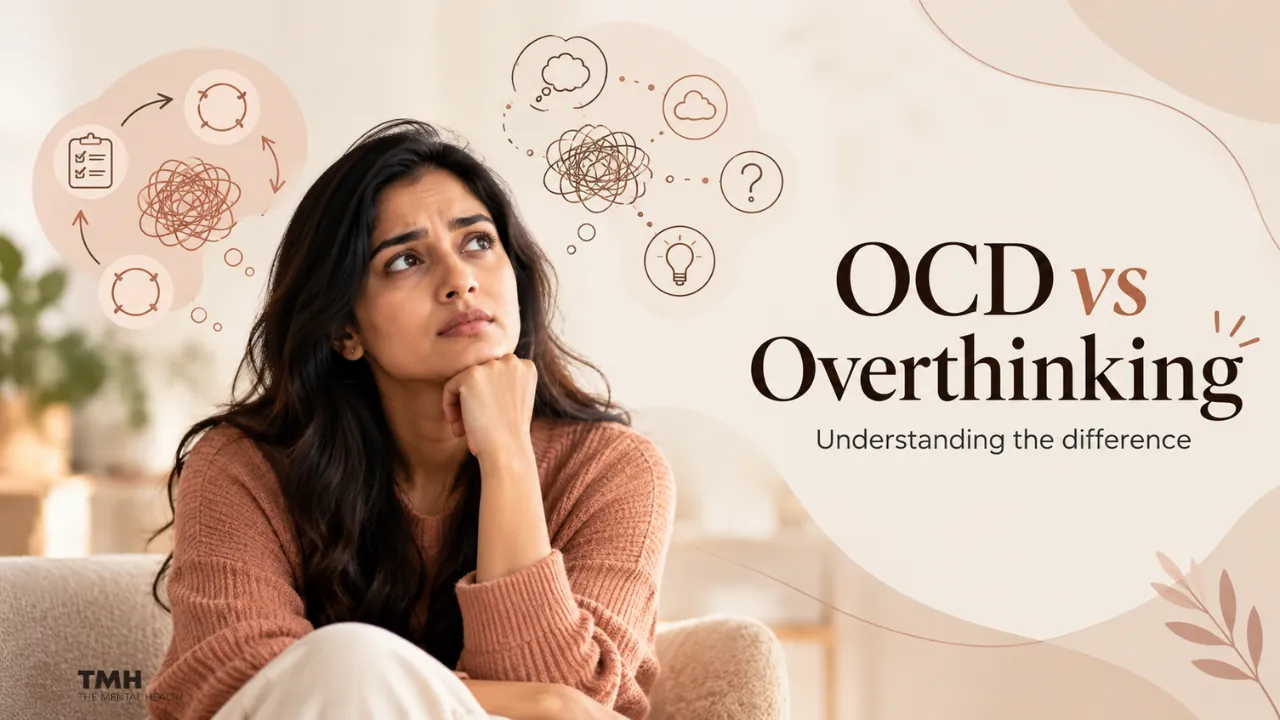
Many people say they are "a bit OCD" when they overthink or like things neat. Real OCD is a clinical condition and feels very different.
Overthinking
Going over decisions, mistakes or "what if" scenarios
Linked to real events or worries
Can feel stressful but is usually connected to the situation
Often eases when the problem is solved or you are distracted
OCD
Intrusive thoughts, images or urges that feel unwanted and disturbing
Compulsions such as checking, washing, counting or mental rituals
Strong need to feel "just right" or to prevent something bad
Rituals bring only brief relief
Takes more than an hour a day or causes major disruption
Key Differences
Overthinking is about problems, OCD is about distressing intrusive thoughts and rituals
Reassurance helps overthinking briefly but feeds OCD
OCD thoughts often feel out of character
They Can Overlap
Someone with anxiety may overthink, and someone with OCD may ruminate. A psychologist can help sort this out.
What Helps
For overthinking: structured problem solving, mindfulness and scheduled worry time
For OCD: exposure and response prevention, a type of cognitive behavioural therapy, sometimes with medicines
When to Seek Help
Rituals take up a lot of time
Distress about thoughts feels overwhelming
Work, study or relationships are affected
Key Takeaways
Overthinking and OCD are different.
OCD involves intrusive thoughts and compulsions.
Reassurance can maintain OCD.
Effective treatment exists.
A professional assessment clarifies the picture.
Final Thoughts
You do not have to guess what is going on. For an assessment, you can consult Dr. Mithila Desai, a clinical psychologist at The Mental Health in Borivali, Mumbai.
Read the full guide
This article is part of our complete guide, OCD and Intrusive Thoughts: Symptoms, Compulsions and Treatment, which covers symptoms, causes, assessment and treatment in one place.
If you are in danger right now
If you have hurt yourself, are thinking of ending your life, or feel you may act on thoughts of harming yourself or someone else, please do not wait for an appointment. Call 112, go to the nearest hospital emergency department, or call Tele-MANAS on 14416 or 1-800-891-4416. Tele-MANAS is the Government of India's free mental health helpline, open 24 hours, in many Indian languages. Messages to The Mental Health are answered during clinic hours.
Common questions
Can overthinking turn into OCD?
They are different conditions, but overthinking and anxiety can occur alongside OCD.
Is being neat the same as OCD?
No. OCD causes distress and disruption, not just a preference for order.
Why do intrusive thoughts feel so disturbing?
They go against your values, which is why they cause distress.
Does reassurance help OCD?
It may relieve you briefly but tends to strengthen the cycle.
Is OCD treatable?
Yes. Many people improve with therapy.
Do I need medicines?
Some people do. Your doctor will guide this.

Registered with the Rehabilitation Council of India · Last reviewed 23 Nov 2026
This guide gives general information about psychological care at The Mental Health. It is not a diagnosis and does not replace a session. Read our editorial policy.