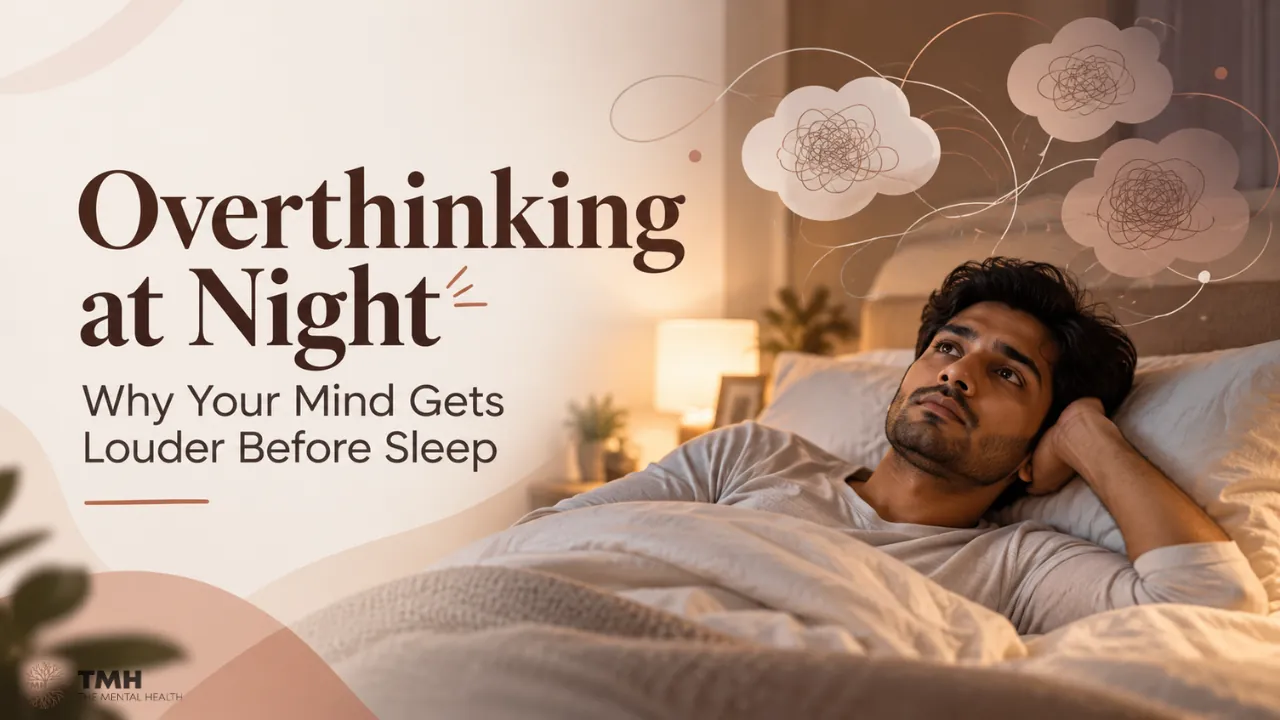
Overthinking is when your mind keeps going over the same thoughts without reaching a useful solution. It often comes from a strong need for certainty or control, fear of making mistakes, worry about what others think, perfectionism or past experiences that made you feel unsafe. Overthinking is not a weakness. It is a thinking pattern that can be understood and changed.
What Does Overthinking Look Like?
Replaying conversations or events
Imagining worst-case outcomes
Struggling to make decisions
Asking many people for opinions
Difficulty sleeping because thoughts will not stop
Feeling mentally tired but unable to switch off
Common Patterns Behind Overthinking
Need for certainty
The mind wants to know for sure that things will be fine. Since life rarely offers full certainty, the search keeps going.
Fear of mistakes
People who fear failure may analyse every option repeatedly to avoid getting things wrong.
Perfectionism
High standards can make any decision feel risky and any outcome feel not good enough.
Worry about others' opinions
Thinking about how you came across or what someone meant can lead to endless replaying.
Past experiences
Criticism, unpredictable environments or trauma can train the mind to stay on alert.
Anxiety and low mood
Anxiety pushes thinking toward future threats, while low mood often pulls it toward past regrets.
Why Does Thinking More Not Help?
Thinking feels productive, but loops do not add new information. They increase stress and make problems seem bigger. Trying to force thoughts away often makes them return more strongly.
What Can Help?
Notice the loop
Label it: "I am overthinking again." This creates a small step back.
Set a worry time
Give yourself a fixed 15 minutes a day to write worries down. Outside that time, gently postpone them.
Move from thinking to action
Ask, "Is there one small step I can take?" If yes, do it. If not, practise letting the thought pass.
Ground yourself
Breathing, a short walk or focusing on your senses brings attention back to the present.
Seek therapy
Cognitive behavioural therapy and related approaches help identify beliefs that drive overthinking and build new habits.
When Should You Seek Help?
If overthinking affects sleep, work, relationships or mood for weeks, or comes with anxiety, panic or low mood, speaking with a psychologist can help.
Key Takeaways
Overthinking is a learned thinking pattern.
It often comes from a need for certainty or fear of mistakes.
Thinking loops rarely solve problems.
Worry time and grounding can help.
Therapy addresses the deeper patterns.
Final Thoughts
Your mind is trying to keep you safe, even when it overdoes it. With awareness and practice, you can learn to guide your thoughts rather than be pulled along by them. For support with overthinking, you can consult Dr. Mithila Desai, a clinical psychologist at thementalhealth.in in Mumbai.
Read the full guide
This article is part of our complete guide, Overthinking and Rumination: Why Your Mind Won't Switch Off, which covers symptoms, causes, assessment and treatment in one place.
If you are in danger right now
If you have hurt yourself, are thinking of ending your life, or feel you may act on thoughts of harming yourself or someone else, please do not wait for an appointment. Call 112, go to the nearest hospital emergency department, or call Tele-MANAS on 14416 or 1-800-891-4416. Tele-MANAS is the Government of India's free mental health helpline, open 24 hours, in many Indian languages. Messages to The Mental Health are answered during clinic hours.
Common questions
Is overthinking a mental illness?
Overthinking itself is not a diagnosis. It is a thinking pattern that can occur on its own or as part of anxiety, OCD or depression. If it causes distress or affects daily life, a psychologist can help assess what is going on.
Why do I overthink at night?
At night there are fewer distractions, so thoughts become louder. Tiredness also reduces your ability to manage worries. A wind-down routine and writing thoughts down before bed can help.
Can overthinking cause physical symptoms?
Yes. Ongoing worry can lead to tension, headaches, stomach upset, tiredness and poor sleep. These symptoms often improve when overthinking and stress are managed.
How do I stop overthinking quickly?
There is no instant switch, but grounding techniques, deep breathing, a short walk or shifting to a practical task can reduce overthinking in the moment. Regular practice builds stronger skills over time.
Is overthinking linked to anxiety?
Often, yes. Anxiety tends to drive worry about the future, which is a common form of overthinking. However, overthinking can also appear with low mood, perfectionism or OCD.
Can therapy help with overthinking?
Yes. Therapies such as cognitive behavioural therapy help you understand why you overthink, challenge unhelpful beliefs and build practical habits. Many people find their thoughts become easier to manage.

Registered with the Rehabilitation Council of India · Last reviewed 23 Nov 2026
This guide gives general information about psychological care at The Mental Health. It is not a diagnosis and does not replace a session. Read our editorial policy.