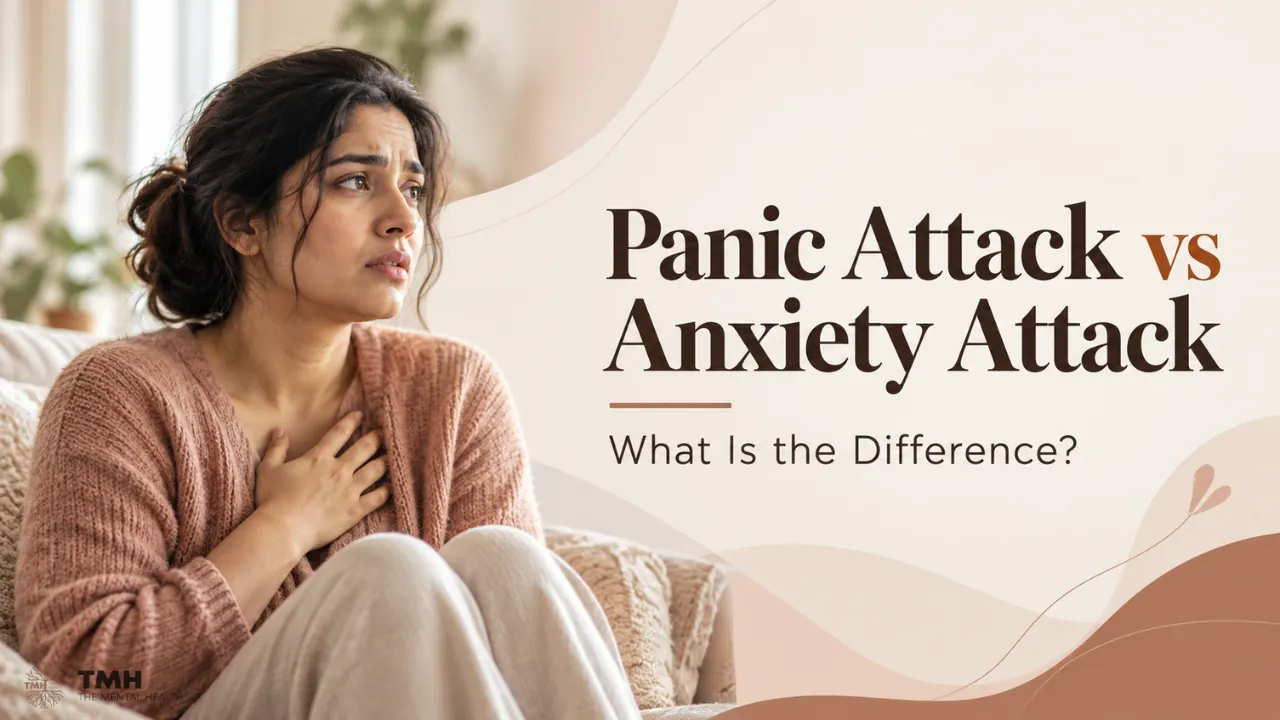
People often use "panic attack" and "anxiety attack" to mean the same thing. They do overlap, but there are important differences in how they start, how intense they are and how they are treated. Knowing the difference helps you describe your experience and get the right support.
What Is a Panic Attack?
A panic attack is a sudden episode of intense fear or discomfort that reaches a peak within minutes. Common symptoms include:
Pounding or racing heart
Chest pain or tightness
Shortness of breath or choking feeling
Sweating, trembling or shaking
Dizziness or feeling faint
Nausea
Chills or hot flushes
Numbness or tingling
Feeling detached or unreal
Fear of losing control, going crazy or dying
Panic attacks can happen unexpectedly, even during sleep or calm moments.
What Is an Anxiety Attack?
"Anxiety attack" is a common phrase rather than a medical term. It usually describes rising worry and tension linked to a stressful situation. Symptoms tend to build gradually and may last longer but feel less intense than a panic attack.
How Do They Compare?
| Feature | Panic attack | Anxiety attack |
|---|---|---|
| Onset | Sudden | Gradual |
| Peak | Within minutes | Builds over time |
| Trigger | Can occur without a trigger | Usually linked to worry or stress |
| Intensity | Very intense | Moderate to high |
| Duration | Often settles within about 10 to 30 minutes | Can last longer |
| Formal diagnosis | Part of panic disorder and other conditions | Not a formal diagnosis |
What Is Panic Disorder?
Panic disorder is diagnosed when someone has repeated unexpected panic attacks and persistent worry about future attacks or changes behaviour to avoid them. Not everyone who has a panic attack has panic disorder.
What Helps During a Panic Attack?
Remind yourself it is a panic attack and will pass
Breathe slowly, with longer out-breaths than in-breaths
Use grounding techniques by focusing on your surroundings
Avoid fighting the sensations, allow them to rise and fall
When Should You Seek Medical Care?
First episodes of chest pain, breathlessness or fainting should be checked by a doctor to rule out heart, lung or other medical causes. Once medical causes are excluded, a psychologist can help.
How Are They Treated?
Cognitive behavioural therapy is highly effective for panic and anxiety. It helps people understand physical sensations, change catastrophic thoughts and gradually face avoided situations. A psychiatrist may consider medicines for some people. If you ever feel unsafe or have thoughts of self-harm, seek urgent help. In India, Tele-MANAS at 14416 offers free support.
Key Takeaways
Panic attacks are sudden and peak within minutes.
Anxiety attacks build gradually around worry.
Symptoms overlap but differ in intensity and onset.
First-time chest symptoms need medical review.
Both respond well to therapy.
Final Thoughts
Whether you experience panic attacks or anxiety attacks, you do not have to manage them alone. Effective treatment can reduce their frequency and impact. Dr. Mithila Desai, a clinical psychologist at The Mental Health in Borivali, Mumbai, treats panic and anxiety.
Read the full guide
This article is part of our complete guide, Anxiety & Panic Attacks: Symptoms, Causes and Treatment, which covers symptoms, causes, assessment and treatment in one place.
If you are in danger right now
If you have hurt yourself, are thinking of ending your life, or feel you may act on thoughts of harming yourself or someone else, please do not wait for an appointment. Call 112, go to the nearest hospital emergency department, or call Tele-MANAS on 14416 or 1-800-891-4416. Tele-MANAS is the Government of India's free mental health helpline, open 24 hours, in many Indian languages. Messages to The Mental Health are answered during clinic hours.
Common questions
What is the difference between a panic attack and an anxiety attack?
A panic attack is sudden, intense and peaks within minutes, sometimes without a trigger. An anxiety attack usually builds gradually in response to worry and is generally less intense but may last longer.
Can a panic attack feel like a heart attack?
Yes. Panic attacks can cause chest pain, racing heart, breathlessness and dizziness. Seek medical care for first episodes or if unsure, to rule out heart problems.
How long does a panic attack last?
Most panic attacks peak within a few minutes and settle within about 10 to 30 minutes, though some people feel shaken for longer afterward.
What is panic disorder?
Panic disorder involves repeated unexpected panic attacks and ongoing worry about having more or avoiding situations because of them. It is treatable with therapy and sometimes medicines.
Can therapy stop panic attacks?
Cognitive behavioural therapy is very effective for panic attacks and panic disorder. Many people experience fewer and less intense attacks after treatment.

Registered with the Rehabilitation Council of India · Last reviewed 23 Nov 2026
This guide gives general information about psychological care at The Mental Health. It is not a diagnosis and does not replace a session. Read our editorial policy.