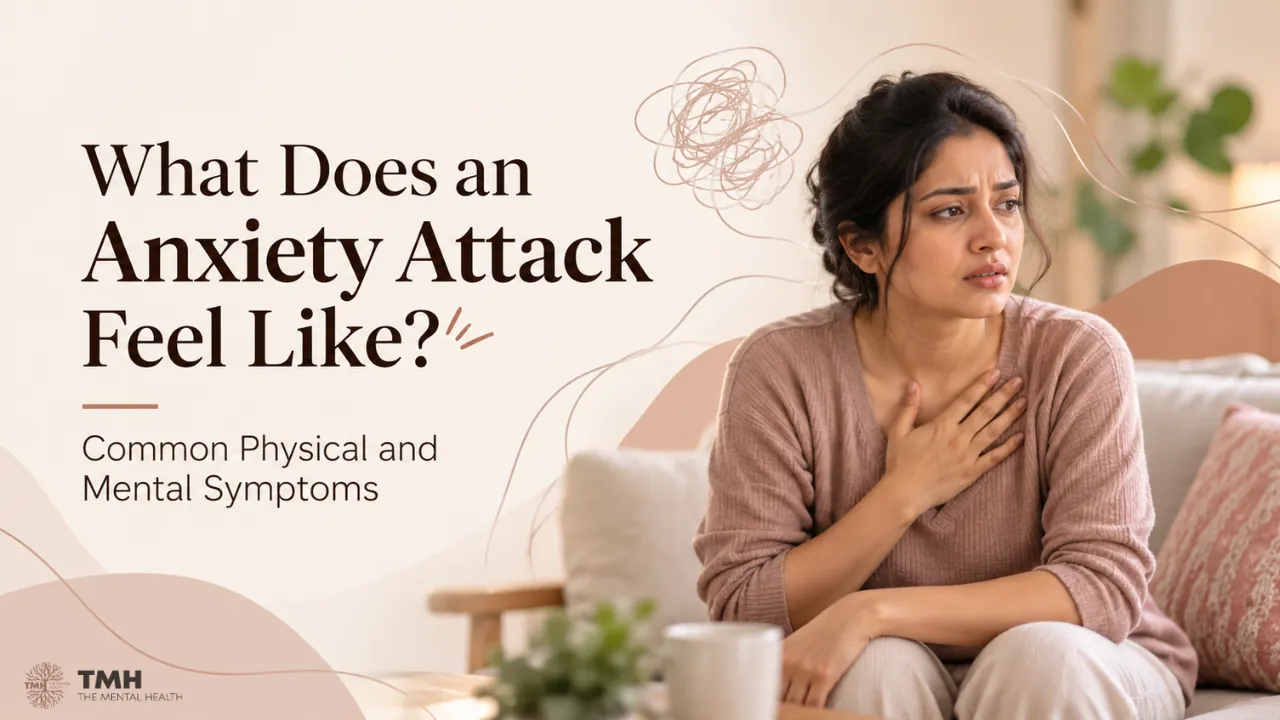
"Anxiety attack" is an everyday term for a period of intense worry or fear that builds up and feels overwhelming. It is not a formal diagnosis, but many people use it to describe what they experience. Understanding the symptoms can make them less frightening and help you know what to do.
What Are the Physical Symptoms?
Racing or pounding heartbeat
Tight chest or chest discomfort
Shortness of breath or feeling you cannot get enough air
Sweating or hot and cold flushes
Trembling or shaky hands
Nausea, stomach churning or diarrhoea
Dizziness or light-headedness
Muscle tension, headaches
Dry mouth
Tingling in hands or feet
What Are the Mental and Emotional Symptoms?
Intense worry or dread
Racing thoughts and "what if" thinking
Feeling on edge or restless
Fear of losing control or something bad happening
Difficulty concentrating
Irritability
Feeling detached or unreal in some cases
How Is It Different From a Panic Attack?
Panic attacks come on suddenly, often peak within minutes and can happen without warning. Anxiety attacks tend to build up more gradually and are linked to worry about a situation. The symptoms overlap, and both can be very distressing.
What Triggers Anxiety Attacks?
Common triggers include work or exam pressure, conflict, health worries, financial stress, caffeine, lack of sleep and major life changes. Sometimes there is no obvious trigger.
What Helps in the Moment?
Slow your breathing
Breathe in gently through the nose for about four counts and out slowly for about six counts. Repeat for a few minutes.
Ground yourself
Notice five things you can see, four you can touch, three you can hear, two you can smell and one you can taste.
Relax your muscles
Tense and release muscle groups one at a time.
Remind yourself
Tell yourself the feeling is uncomfortable but will pass.
Reduce stimulation
Move to a quieter space if possible.
When Should You Seek Help?
Seek professional support if attacks are frequent, cause you to avoid places or activities, affect work or relationships, or come with low mood. Chest pain, fainting or severe breathlessness should be assessed medically. If you have thoughts of self-harm, seek urgent help. In India, Tele-MANAS at 14416 provides free support.
How Is Anxiety Treated?
Cognitive behavioural therapy helps you understand and manage anxious thoughts and physical symptoms. Lifestyle changes, relaxation skills and, in some cases, medicines prescribed by a psychiatrist also help.
Key Takeaways
Anxiety attacks combine physical and mental symptoms.
Racing heart, tight chest and racing thoughts are common.
They usually build gradually and then pass.
Breathing and grounding techniques help in the moment.
Frequent attacks deserve professional support.
Final Thoughts
Anxiety attacks can feel frightening, but they are manageable and treatable. Learning what is happening is the first step toward feeling more in control. Dr. Mithila Desai, a clinical psychologist at The Mental Health in Borivali, Mumbai, supports people experiencing anxiety.
Read the full guide
This article is part of our complete guide, Anxiety & Panic Attacks: Symptoms, Causes and Treatment, which covers symptoms, causes, assessment and treatment in one place.
If you are in danger right now
If you have hurt yourself, are thinking of ending your life, or feel you may act on thoughts of harming yourself or someone else, please do not wait for an appointment. Call 112, go to the nearest hospital emergency department, or call Tele-MANAS on 14416 or 1-800-891-4416. Tele-MANAS is the Government of India's free mental health helpline, open 24 hours, in many Indian languages. Messages to The Mental Health are answered during clinic hours.
Common questions
What does an anxiety attack feel like?
It often involves intense worry with physical symptoms such as a racing heart, tight chest, shortness of breath, sweating, trembling, nausea and dizziness, along with racing thoughts and fear of losing control.
How long does an anxiety attack last?
It varies. Some last minutes, while others build and fade over a longer period. Breathing and grounding techniques can help symptoms settle sooner.
Can anxiety cause chest pain?
Yes, anxiety can cause chest tightness or discomfort. However, chest pain should be checked by a doctor to rule out heart or other medical causes, especially if it is new or severe.
What should I do during an anxiety attack?
Slow your breathing, use grounding techniques, relax your muscles and remind yourself the feeling will pass. Move to a calmer place if you can.
When should I see a psychologist for anxiety attacks?
See a psychologist if attacks are frequent, lead to avoidance, affect daily life or come with low mood. Effective treatments such as CBT are available.

Registered with the Rehabilitation Council of India · Last reviewed 23 Nov 2026
This guide gives general information about psychological care at The Mental Health. It is not a diagnosis and does not replace a session. Read our editorial policy.