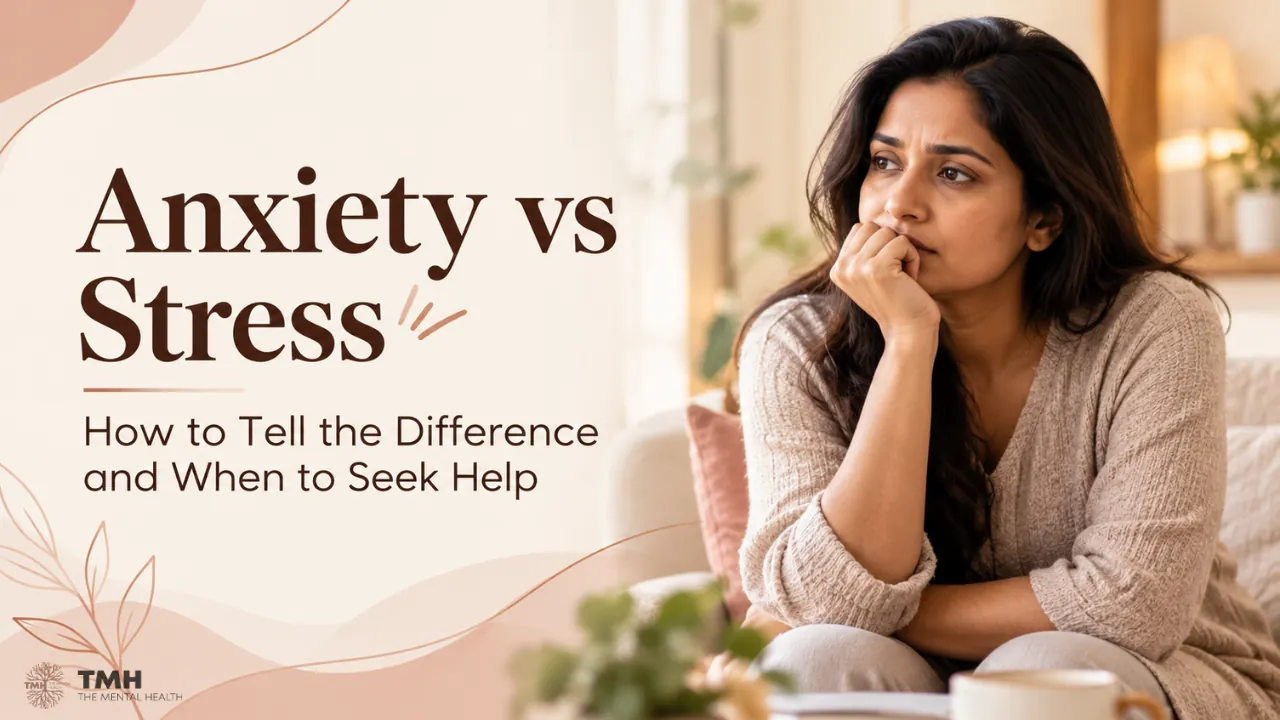
Stress and anxiety feel similar and are often used interchangeably, but they are not the same. Stress is usually a response to a specific pressure, such as a deadline or conflict. Anxiety is a persistent sense of worry or fear that can continue even when no clear threat is present. Knowing the difference helps you decide what kind of support you need.
What Is Stress?
Stress is the body's natural response to pressure. It can be helpful in short bursts, improving focus and motivation. Common triggers include work demands, exams, money worries, family responsibilities and life changes. Stress usually reduces when the pressure eases.
What Is Anxiety?
Anxiety is a feeling of worry, fear or unease that can be out of proportion to the situation or continue without a clear cause. When it is persistent and interferes with life, it may be an anxiety disorder, such as generalised anxiety disorder, social anxiety or panic disorder.
How Do They Compare?
| Feature | Stress | Anxiety |
|---|---|---|
| Trigger | Usually a clear external pressure | May have no clear trigger |
| Duration | Often short-term | Can persist for weeks or months |
| Focus | Current demands | Future worries, "what if" thoughts |
| Response to resolution | Eases when the stressor ends | May continue regardless |
| Impact | Can be motivating in small amounts | Often disruptive |
What Symptoms Overlap?
Both can cause:
Muscle tension and headaches
Sleep difficulties
Irritability
Fatigue
Trouble concentrating
Fast heartbeat or stomach upset
How Can You Tell Which One You Have?
Ask yourself:
Is there a clear cause, and does the feeling ease when it passes?
Do I worry about many things most days?
Do I feel unable to switch off worrying thoughts?
Is it affecting my work, relationships or sleep for weeks?
If worry persists without clear cause or feels uncontrollable, anxiety is more likely.
What Helps Manage Stress and Anxiety?
Regular physical activity
Consistent sleep routine
Breathing and relaxation exercises
Limiting caffeine and alcohol
Breaking tasks into manageable steps
Talking with trusted people
Setting boundaries at work and home
When Should You Seek Professional Help?
Consider seeing a clinical psychologist if worry or tension lasts more than a few weeks, feels uncontrollable, causes panic attacks, leads to avoidance, or affects work, studies, relationships or sleep. Cognitive behavioural therapy is effective for anxiety. If you ever feel unsafe or have thoughts of self-harm, seek urgent help. In India, Tele-MANAS at 14416 offers free support.
Key Takeaways
Stress responds to a clear pressure and usually eases.
Anxiety can persist without a clear cause.
Symptoms overlap significantly.
Lifestyle strategies help both.
Persistent or disruptive worry deserves professional support.
Final Thoughts
Understanding whether you are dealing with stress or anxiety is the first step toward the right support. Help is available, and anxiety is very treatable. Dr. Mithila Desai, a clinical psychologist at The Mental Health in Borivali, Mumbai, helps people manage stress and anxiety.
Read the full guide
This article is part of our complete guide, Anxiety & Panic Attacks: Symptoms, Causes and Treatment, which covers symptoms, causes, assessment and treatment in one place.
If you are in danger right now
If you have hurt yourself, are thinking of ending your life, or feel you may act on thoughts of harming yourself or someone else, please do not wait for an appointment. Call 112, go to the nearest hospital emergency department, or call Tele-MANAS on 14416 or 1-800-891-4416. Tele-MANAS is the Government of India's free mental health helpline, open 24 hours, in many Indian languages. Messages to The Mental Health are answered during clinic hours.
Common questions
What is the main difference between stress and anxiety?
Stress is a reaction to a specific pressure and usually eases when the situation resolves. Anxiety is persistent worry that may continue without a clear trigger and can affect daily life.
Can stress turn into anxiety?
Yes. Long-term stress can contribute to developing anxiety, especially without enough rest or support. Managing stress early can help prevent this.
How do I know if my anxiety is serious?
If worry lasts for weeks, feels uncontrollable, causes panic attacks or affects work, relationships or sleep, it is worth speaking with a mental health professional.
Can anxiety cause physical symptoms?
Yes. Anxiety can cause a fast heartbeat, muscle tension, headaches, stomach upset, sweating and fatigue. A doctor can rule out medical causes if needed.
What therapy helps anxiety?
Cognitive behavioural therapy is one of the most effective therapies for anxiety. It helps you understand anxious thoughts and develop practical coping skills.

Registered with the Rehabilitation Council of India · Last reviewed 23 Nov 2026
This guide gives general information about psychological care at The Mental Health. It is not a diagnosis and does not replace a session. Read our editorial policy.