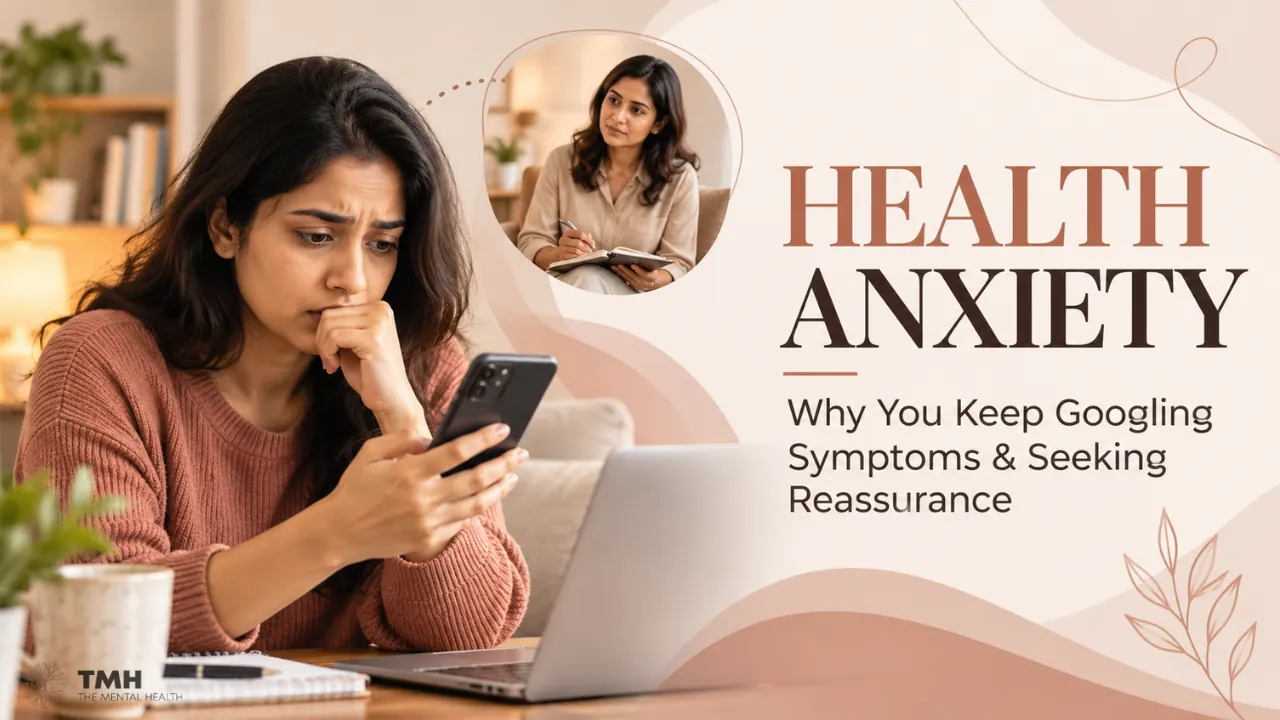
Health anxiety, sometimes called illness anxiety, is persistent worry about having or developing a serious illness, even after medical reassurance. Everyday body sensations such as a headache or a skipped heartbeat feel like signs of danger. Many people with health anxiety search symptoms online repeatedly, but the relief rarely lasts.
What Are the Signs of Health Anxiety?
Persistent worry about having a serious illness
Interpreting normal sensations, such as aches, heartbeats or tingling, as dangerous
Frequently checking the body, pulse or blood pressure
Searching symptoms online for long periods
Seeking reassurance from family, friends or doctors repeatedly
Distrust of normal test results, or relief that fades quickly
Avoiding health information, hospitals or medical appointments in some cases
Distress that affects work, sleep or relationships
Why Does Googling Make It Worse?
Online searches often show rare and serious possibilities alongside common harmless ones. Anxious minds focus on the frightening results. Searching may bring brief relief, but the doubt returns, prompting more searching. This loop strengthens the anxiety.
What Is the Reassurance Cycle?
A body sensation triggers worry.
Anxiety rises.
You check, search or ask for reassurance.
Anxiety drops briefly.
Doubt returns, and the cycle repeats.
Over time, the brain learns that checking is necessary to feel safe, making it harder to tolerate uncertainty.
What Causes Health Anxiety?
It can be linked to past illness experiences, a loved one's serious illness, general anxiety, stressful life periods and personality traits such as high sensitivity to body sensations. Media and online health information can also fuel it.
How Is Health Anxiety Treated?
Cognitive behavioural therapy
CBT helps you notice catastrophic thoughts, consider realistic alternatives and understand how attention to sensations increases them.
Reducing checking and reassurance
Gradually cutting down searching, body checking and reassurance-seeking helps the brain relearn that uncertainty can be tolerated.
Working with your doctor
Agreeing on a plan for regular, scheduled check-ups rather than frequent unplanned visits can help.
Mindfulness and relaxation
These help reduce physical tension and focus on the present.
Medicines
For some people, a psychiatrist may consider medicines alongside therapy.
What Can You Try Now?
Set limits on symptom searching
Delay checking by a set time and notice the urge pass
Write down worries and review them later
Keep busy with meaningful activities
Practise slow breathing when sensations feel alarming
When Should You See a Doctor or Psychologist?
New, persistent or worsening physical symptoms should be assessed by a doctor. If medical checks are reassuring but worry continues, see a clinical psychologist. Seek urgent help if you ever feel unsafe or have thoughts of self-harm. In India, Tele-MANAS at 14416 offers free support.
Key Takeaways
Health anxiety involves persistent fear of serious illness.
Googling and reassurance bring only short-term relief.
The checking cycle keeps anxiety going.
CBT helps break the cycle.
Real new symptoms should still be checked medically.
Final Thoughts
Health anxiety is real and exhausting, but it is treatable. Learning to tolerate uncertainty can free you from constant checking. Dr. Mithila Desai, a clinical psychologist at The Mental Health in Borivali, Mumbai, helps people manage health anxiety.
Read the full guide
This article is part of our complete guide, Anxiety & Panic Attacks: Symptoms, Causes and Treatment, which covers symptoms, causes, assessment and treatment in one place.
If you are in danger right now
If you have hurt yourself, are thinking of ending your life, or feel you may act on thoughts of harming yourself or someone else, please do not wait for an appointment. Call 112, go to the nearest hospital emergency department, or call Tele-MANAS on 14416 or 1-800-891-4416. Tele-MANAS is the Government of India's free mental health helpline, open 24 hours, in many Indian languages. Messages to The Mental Health are answered during clinic hours.
Common questions
What is health anxiety?
Health anxiety is persistent worry about having or developing a serious illness, often with frequent body checking, symptom searching and reassurance-seeking, even after normal medical results.
Why can't I stop Googling my symptoms?
Searching gives short-term relief from worry, which reinforces the habit. But doubt returns, leading to more searching. Therapy can help break this cycle.
Is health anxiety a real condition?
Yes. Health anxiety, also called illness anxiety, is a recognised mental health condition that can cause significant distress and is treatable.
How is health anxiety treated?
Cognitive behavioural therapy is the main treatment. It helps change how body sensations are interpreted and gradually reduces checking and reassurance-seeking. Medicines may help some people.
Should I ignore my physical symptoms if I have health anxiety?
No. New, persistent or worsening symptoms should be checked by a doctor. Agreeing on a plan with your doctor for scheduled check-ups can help balance safety and anxiety.

Registered with the Rehabilitation Council of India · Last reviewed 23 Nov 2026
This guide gives general information about psychological care at The Mental Health. It is not a diagnosis and does not replace a session. Read our editorial policy.